Why flexible working is now the norm — and what that means for office utilisation
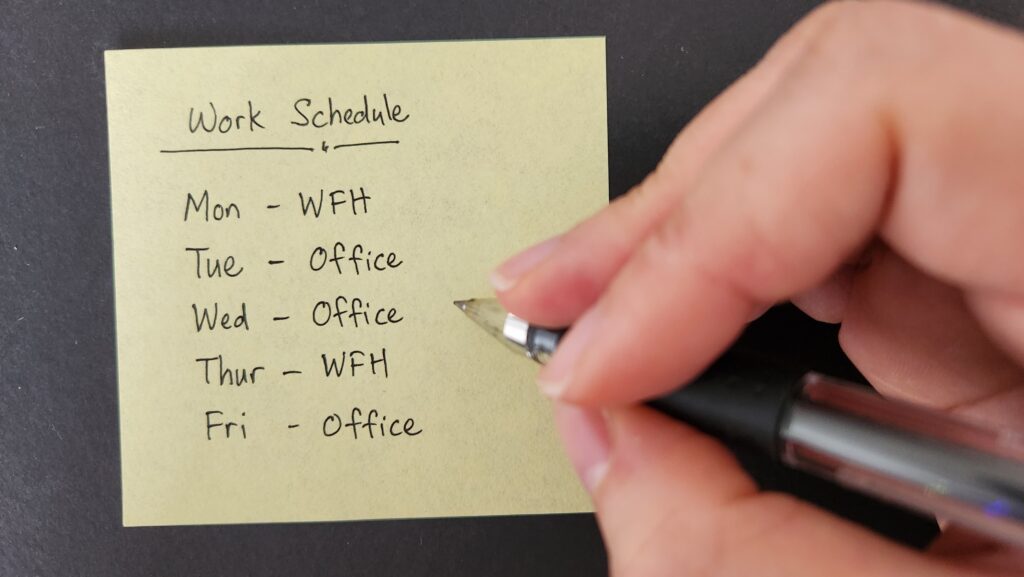
Despite bold pronouncements about a full return to the office, the reality is very different: flexible working is fast becoming standard.
As reported in Facilitate Magazine, even organisations insisting on a return often find that flex-first or hybrid models are what employees gravitate towards.
The growing gap between “back to the office” and what actually happens
- Leaders keep pushing for more in-office presence, but many employees are choosing differently.
- Teams show varied work styles: some want frequent face-to-face interaction; others value the calm and concentration remote work provides.
- Because of this variability, many organisations are seeing large portions of their office remain underutilised.
The numbers tell the story
Recent data — including insights echoed in Knight Frank’s 2025 (Y)ourspace survey — shows a sharp disconnect between how offices are planned and how they’re used:
- More than a third of corporate real estate leaders say they are dissatisfied with current levels of workplace utilisation.
- 30% consider “delivering higher utilisation and occupancy” to be their top challenge.
- 25% believe “aligning workstyles and workplaces” is the biggest obstacle.
Why this matters
Unused or under-utilised office space is expensive. It’s more than just a cost; it’s a missed opportunity. A well-utilised office provides:
- Optimised real estate investment
- Better employee experience (people get what they need, where they need it)
- Flexibility to respond to evolving working styles
What organisations need now
To bridge the gap between “expectation vs. usage,” organisations must move from assumption-based planning to data-driven strategy. Here are critical elements:
- Granular utilisation data
- Track not just entry/exit, but desk usage, meeting‐room occupancy, team-based patterns, and peak times.
- Flexible design and layout
- Spaces that adapt — modular furniture, zones for collaboration vs. quiet work, scalable floor plans.
- Stakeholder alignment & change management
It’s not just about physical space. Cultural expectations, symbolic value of HQs, and legacy practices all matter.
The role of technology
This is where Abintra’s strength comes in. Utilisation technology gives organisations the visibility they need to make informed decisions. Demand-led data, analytics, and continuous feedback loops allow:
- Smarter space planning
- Right-sizing (or re-allocating) of underused assets
- Measurable links between space design, occupancy, and staff satisfaction
Accepting which way the wind blows
Flexible working isn’t a “nice to have” anymore; it’s the default for many organisations — regardless of leadership aspirations for a full office return.
The focus has now shifted. The question is no longer if flexible work will stay, but how offices can be rewritten (literally and figuratively) to match reality. Organisations that lean in and combine strategic data with adaptable spaces will get more than just cost savings. They’ll get resilient workplaces, more engaged teams, and environments that deliver value.